
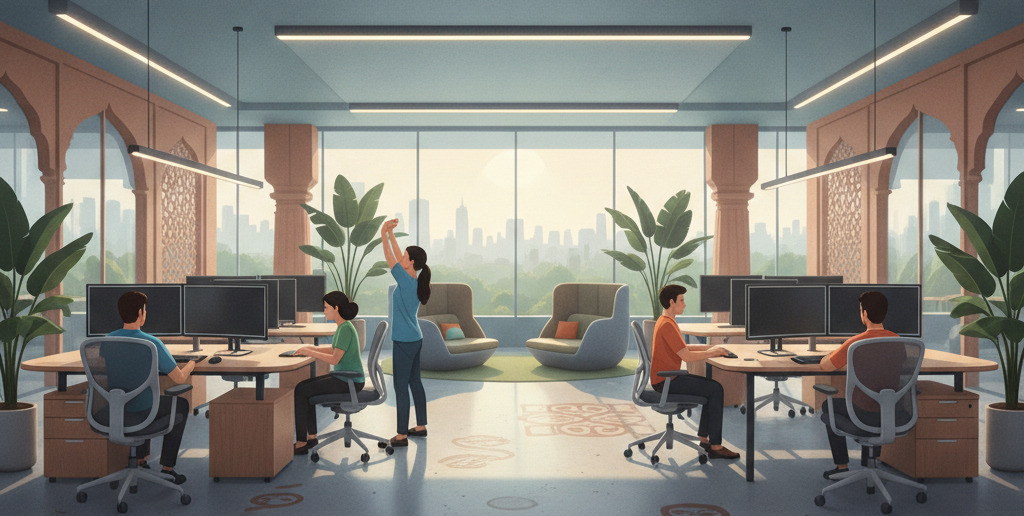
Deep in the heart of Bengaluru’s crowded technology district, a major software company watched its daily performance metrics drop significantly over a single year. The leadership traced this slump directly to physical fatigue and back pain among their programmers. This quiet crisis sparked a major shift in how companies build their physical work environments in India’s Silicon Valley.
This is the story of how bringing physical well-being into the workplace can change everything, showing that physical setup directly shapes business output and team health. By embracing ergonomic office design Karnataka businesses are changing the connection between physical comfort and daily output.
Our look into these local shifts shows why companies are moving toward building an employee wellness workspace that supports long-term health. We also look at how finding the specialized ergonomic office furniture Bangalore suppliers provide can solve physical strain and lead to highly efficient office layouts.
The Spark for Change in Karnataka Workspaces
Rohan stood in his office and watched his development team struggle through a difficult software launch. His developers were using thick textbooks and empty cardboard boxes to lift their screens to eye level. The constant shifting, heavy sighing, and stretching in their chairs pointed to a much deeper structural problem.
The team lived with constant backaches, stiff necks, and sore wrists that slowed down their daily coding. Rohan decided to run a detailed workspace audit across all three floors to find out exactly what was wrong.
The results were shocking. A vast majority of the office chairs offered no adjustable lower back support at all. Employees of different heights sat at identical, unyielding desks for nine hours every day.
This rigid setup forced human bodies to bend to the furniture instead of the furniture fitting the people.
This physical mismatch led directly to small injuries and mental exhaustion, which made more people call in sick. The company realized that standard office setups simply failed to fit the diverse physical needs of their modern team. To fix these painful issues, they started a complete overhaul of their workspace.
The initial workspace audit highlighted several main complaints from the team before the changes:
- Constant lower back pain from stiff, unsupportive chairs that offered no upper back relief.
- Severe wrist strain and numbness from fixed-height desks that forced hands into unnatural typing positions.
- Tired eyes and headaches caused by screens placed badly under harsh overhead bulbs.
How We Transformed Spaces with Ergonomic Office Design Principles in Karnataka
The upgrade started by throwing out the old, stiff seating. Rohan bought high-quality ergonomic office furniture Bangalore workshops build specifically for long hours of desk work. The new chairs came with synchro-tilt setups, 3D adjustable armrests, and back supports that moved with the natural curve of the spine.
The team replaced the heavy, static desks with dual-motor sit-stand workstations. These desks let developers move from sitting to standing with a quick button press. This simple movement got their blood flowing, eased spine pressure, and kept energy levels high during long coding sessions.
The physical shift required careful planning to get monitor heights exactly right. The team installed adjustable arms so each person could set their screens to their precise eye level.
Local weather in southern India also played a major role in how they laid out the space. Bengaluru’s climate, with its warm afternoons and chilly mornings, required a careful mix of natural light and indoor temperature control.
The design crew set up desks sideways to the windows to stop screen glare while bringing in plenty of daylight. This layout relieved eye strain and cut down the need for bright overhead lights.
| Workspace Element | Old Setup | New Ergonomic Standard |
|---|---|---|
| Task Chair | Non-adjustable back, rigid arms, no lower back support | Synchro-tilt setup, 3D arms, active lower back support |
| Work Desk | Static height of 75 centimeters, no movement | Dual-motor sit-stand desk, height range of 65 to 125 centimeters |
| Monitor Placement | Fixed stand on desk surface, forcing neck strain | Adjustable gas-spring arm with tilt and spin |
| Keyboard Angle | Flat on desk surface, causing wrist bend | Slanted keyboard tray to keep wrists in a natural line |
This physical change turned the office into a highly responsive environment. Employees no longer had to slouch or stretch just to get through their daily tasks in comfort.
Designing High-Output Office Layouts for Diverse Regional Teams
The planning went far beyond individual desks to cover the entire floor plan. Rohan focused on creating highly efficient office layouts that balance group work with quiet, solo focus. They changed the open floor plan to lower noise and encourage people to walk around during the day.
The design crew set up clear areas on each floor. They placed noisy group zones, like meeting rooms and brainstorming spaces, far away from the quiet desks. This separation cut down on noise and helped engineers keep their focus.
They added quiet focus pods for deep research, using sound-absorbing panels made from recycled local materials. This variety of spaces let people choose how and where to work based on their tasks.
They encouraged movement by putting water stations and break areas farther apart. This layout turned desk-bound workers into active people who walked more throughout the day.
These changes showed that moving around is key to keeping mind and body sharp during long shifts. Teams worked together much better when they had spaces built for talking.
These modern layouts use three main zones to balance group work and solo focus:
- Quiet focus areas built with sound dampening, soft dimmable lights, and adjustable desks.
- Group work hubs with rolling whiteboards, tall standing tables, and shared screens.
- Rest zones featuring natural sunlight, soft couches, and green plants.
Cultivating an Employee Wellness Workspace Beyond Ergonomic Seating
Real workplace well-being takes more than just buying nice chairs. Rohan knew that clean air, quiet rooms, and natural elements are vital parts of an employee wellness workspace. In Karnataka’s growing cities, dust and dirty indoor air can slow down thinking over time.
The team brought in air-cleaning plants like snake plants and peace lilies across the office. These plants helped freshen the air and added a calm, green feel to the tech-filled space.
They put in lighting systems that mimic the sun to help people keep healthy sleep cycles, even during late shifts. The lights shifted from bright, cool tones in the morning to warm, soft amber in the evening.
They hung sound baffles made from farm waste from the ceiling to catch loud noises. This cut down background noise, letting developers focus without wearing heavy headphones all day.
The investment showed real results within six months of the redesign. Workers reported feeling much better, and the company saw a major drop in sick days.
The team tracked the success of these health efforts using several concrete business metrics:
- A substantial reduction in complaints about back, neck, and shoulder strain.
- A noticeable rise in daily coding speeds because developers faced fewer physical pains.
- A clear rise in team retention, especially among senior engineers who care about physical comfort.
Future Trends in Ergonomic Office Design for Karnataka Enterprises
Building a supportive workspace is an ongoing path of learning and growth. Rohan started regular sessions to show everyone how to adjust their new chairs. A highly adjustable chair only works if the person sitting in it knows how to set the back support and seat depth.
The company added a simple computer reminder that tells people to stand up and stretch every forty-five minutes. This small habit stops the stiff muscles that come from sitting too long.
Office managers watch how the spaces are used to keep improving the layout based on what workers say. This ongoing cycle keeps the office helpful and healthy as the company grows toward 2026.
Putting resources into physical health changed the office culture, proving that human comfort is tied directly to company success. The office is no longer just a room with desks, but a tool that keeps energy and ideas flowing.
The change in this Karnataka office shows that healthy physical design is a smart business choice, not a luxury. By matching physical spaces with human biology, companies can find new levels of drive and happiness.
The main lessons from this project point to four simple steps:
- Buy highly adjustable chairs and standing desks to fit every body shape.
- Arrange layouts to make moving around natural using different work zones.
- Improve the sensory space with green plants and natural lights to support mental health.
- Get durable, certified furniture from local suppliers to make sure it lasts.
Designing for the human body protects both health and business growth. The modern office interior design must adapt to the physical needs of its workers to help them succeed over time.