
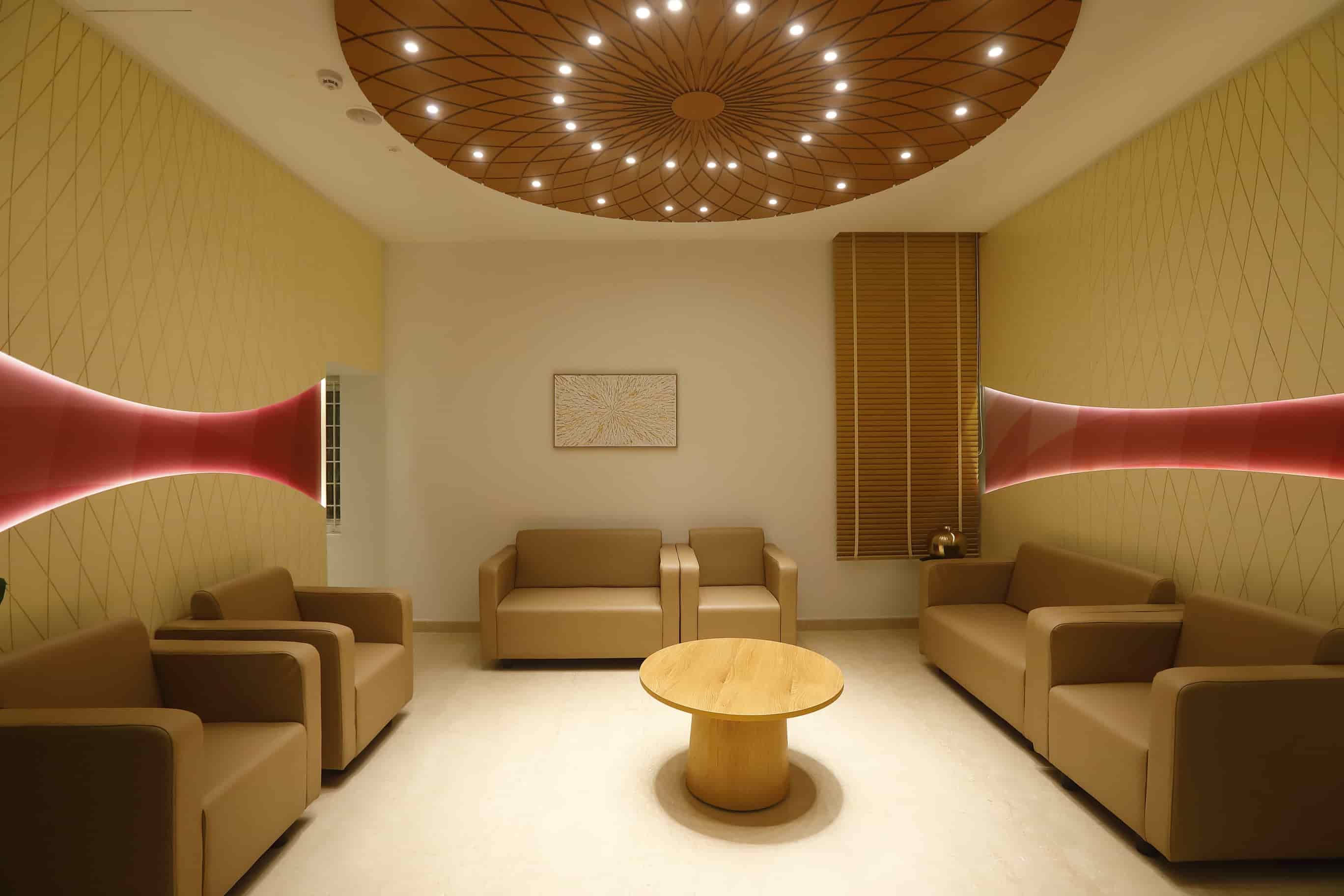
Expanding your corporate footprint across South India requires more than just physical space; it demands a high-performance environment engineered for scale, uptime, and employee productivity. For IT and ITES organizations, the office fit-out process is a critical infrastructure project that directly influences operational efficiency and long-term scalability.
At Touchstone, we have spent over 18 years refining the art of enterprise-grade workspace construction. From managing complex MEP requirements to ensuring seamless interior aesthetics, we help global and domestic brands navigate the complexities of large-scale commercial expansion across Tamil Nadu, Karnataka, Telangana, and Andhra Pradesh.
- Strategic Focus:ITES office fit-outs must prioritize heavy MEP/HVAC dependencies, data networking, and ergonomic high-density layouts.
- Single-Entity Advantage:Using a single-point-of-contact contractor eliminates fragmented communication and accelerates project delivery.
- Regulatory Compliance:Professional fit-outs ensure adherence to local safety, fire, and structural codes across South Indian hubs.
- Scale Matters:Enterprise-grade projects (10,000+ sq.ft.) require specialized turnkey expertise, not standard small-office interior design.
What is ITES office fit out?
An ITES (Information Technology Enabled Services) office fit-out is the end-to-end process of transforming a shell commercial space into a fully functional, technology-ready, and ergonomic workplace. It encompasses structural civil works, intricate MEP (Mechanical, Electrical, and Plumbing) systems, data center infrastructure, and high-end interior finishes tailored to the specific operational demands of IT-driven businesses.
Why is ITES office fit out important?
For ITES companies, the workspace is a production tool. According to aGartner workplace report, optimized office layouts can increase employee productivity by up to 15%. In the high-density environments typical of IT/ITES sectors, a poorly executed fit-out leads to overheating, network instability, and safety hazards.
A professional fit-out ensures that your facility is “Day One Ready.” By integrating specialized HVAC systems and robust fire-fighting infrastructure early in the design phase, companies mitigate the risk of expensive retrofitting. As noted byMcKinsey & Company research, capital projects that prioritize integrated design phases are 20% more likely to meet their original budget and timeline goals.
What is Turnkey Contracting?
Turnkey contracting is a project delivery model where a single entity assumes full responsibility for the entire scope of work, from initial architectural design to final construction and commissioning, ensuring the client receives a finished, ready-to-use space.
How does ITES office fit out work?
The process functions as a multi-disciplinary orchestration of trades. It begins with site analysis and spatial strategy, followed by technical design (MEP, HVAC, structural load-bearing), and concludes with high-end interior finishing and final certification.
By adopting a single-entity approach, such as the methodology employed by Touchstone, companies avoid the common “fragmented contractor trap.” When architects, MEP engineers, and interior contractors operate under one umbrella, communication bottlenecks are removed, and structural errors are mitigated before they reach the construction phase.
How to implement an ITES office fit out
Step 1: Strategic Spatial Planning
Define your density requirements and workflow zones. This stage involves mapping out server rooms, breakout areas, and high-density workstations to ensure optimal traffic flow and ergonomic efficiency.
Step 2: Technical Infrastructure Design
Develop detailed MEP and HVAC blueprints. Because ITES facilities require intense cooling and redundant power systems, this step is critical for preventing operational downtime.
Step 3: Procurement and Vendor Coordination
Centralize procurement to ensure material quality and timeline consistency. A unified project manager tracks the delivery of specialized materials, such as fire-rated partitions and high-grade networking hardware.
Step 4: Execution and Safety Compliance
Execute the civil and interior works according to the master schedule. Safety is paramount—ensure all installations meet local, national, and international corporate safety standards.
Step 5: Handover and Commissioning
Conduct a final walkthrough to test all integrated systems. This includes load-testing electrical grids, verifying HVAC performance, and ensuring the workspace is fully operational for your teams.
Comparison: Traditional Construction vs. Integrated Turnkey
| Aspect | Traditional Fragmented Model | Integrated Turnkey (Touchstone) |
|---|---|---|
| Point of Contact | Multiple (Architect, MEP, Civil) | Single Entity |
| Timeline | High Risk of Delays | Accelerated/Guaranteed |
| Responsibility | Fragmented/Finger-pointing | Single-Point Accountability |
| Cost Control | Hidden Variations | Transparent/Fixed Scope |
| Integration | Poor (System Clashes) | Seamless (Unified Engineering) |
What are the benefits of ITES office fit out?
- Optimized Operational Efficiency:Tailored layouts reduce movement fatigue and increase focus.
- Future-Proof Infrastructure:Scalable MEP systems allow for easy upgrades as your team size grows.
- Brand Expression:High-end interiors reinforce your corporate identity to clients and employees.
- Reduced Downtime:Professional commissioning prevents the “teething issues” common in DIY or fragmented builds.
- Regulatory Safety:Compliance with fire and safety codes reduces corporate liability.
Common ITES office fit out mistakes
- Underestimating cooling (HVAC) capacity for high-density server environments.
- Neglecting acoustic treatment in open-plan office layouts.
- Failing to plan for future cabling and network upgrades.
- Hiring disparate contractors, leading to coordination nightmares and project delays.
- Ignoring the importance of local compliance and building permits in South India.
Key statistics about ITES office fit out
According toStatista data, the commercial interior design market is projected to grow significantly as enterprises shift toward hybrid-ready, tech-integrated spaces. Furthermore, aJLL commercial real estate reportindicates that companies using integrated design-build models report a 33% reduction in project delivery time. Research fromCBREshows that 60% of enterprise leaders now view workplace design as a primary driver for talent retention. Finally, studies by theWorld Green Building Councilconfirm that improved indoor air quality and lighting design can boost employee cognitive performance by 26%.
What is MEP Engineering?
MEP stands for Mechanical, Electrical, and Plumbing. In ITES fit-outs, it refers to the essential systems that maintain a building’s environment, including HVAC, power distribution, and water management.
Case study: How a major IT firm achieved rapid deployment
Challenge
A global IT firm needed a 40,000 sq.ft. facility in Chennai completed within an aggressive 10-week window to meet a client onboarding deadline. Previous fragmented approaches had resulted in 16-week timelines.
Solution
The firm engaged a single-entity turnkey contractor. By overlapping design, civil works, and interior fit-outs, the project team eliminated the standard “waiting period” between trades.
Results
- Project delivered in 6 weeks instead of 10.
- Zero structural non-compliance incidents.
- Seamless transition for 500+ employees on Day One.
Frequently Asked Questions
Does Touchstone work on small office interior design?
No. Touchstone specializes exclusively in enterprise-grade, mid-to-large-scale commercial footprints (typically 10,000+ sq.ft.). We do not undertake small office interior design and build projects.
What is the benefit of a single-entity contract?
It provides a single point of accountability, prevents communication breakdowns between contractors, and ensures that the design vision is maintained throughout the construction process.
How long does an ITES office fit out take?
Timelines vary based on scale and complexity, but integrated turnkey models are designed to reduce standard industry timelines by 20% to 40%.
Do you handle MEP and HVAC?
Yes. Our infrastructure packages include comprehensive MEP, specialized HVAC, fire-fighting systems, and data networking.
Where does Touchstone operate?
We have a strong regional footprint across Tamil Nadu, Karnataka, Telangana, and Andhra Pradesh.
How can we get a project estimate?
For large-scale enterprise projects, please contact us at projects@tispl.in to schedule a strategic workplace consultation.
Is it necessary to have an in-house architect?
Partnering with a Design & Build firm like Touchstone provides you with an integrated team of architects and engineers, eliminating the need to manage external design consultants separately.
What makes an ITES office different from a standard office?
ITES offices require higher power density, advanced cooling for server rooms, specialized data cabling infrastructure, and high-density seating layouts compared to general corporate office spaces.
Key Takeaways
- ✓ Integrated Turnkey Contracting is the most efficient path for enterprise expansion.
- ✓ Focus on technical infrastructure (MEP/HVAC) is non-negotiable for ITES facilities.
- ✓ Single-point-of-contact models reduce project risk and timeline overruns.
- ✓ Data-backed design improves employee productivity and retention.
- ✓ Touchstone provides specialized enterprise support across South India.
Expanding your enterprise footprint is a significant commitment. By choosing an integrated Design & Build partner, you ensure that your facility is not just a place to work, but a strategic asset that supports your growth.
Ready to build? Contact the Touchstone team today to discuss your next large-scale corporate expansion.