
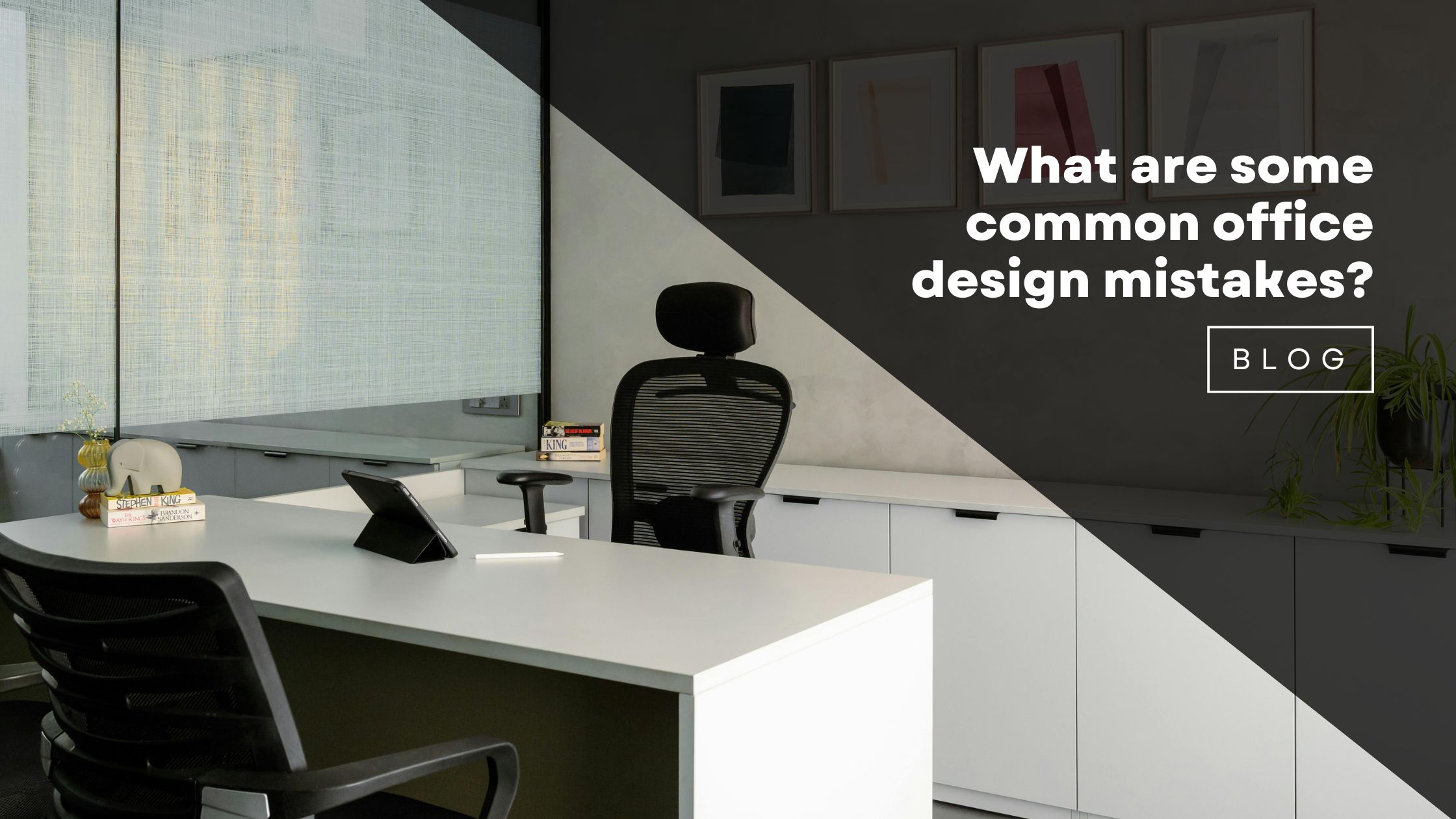
In the modern corporate landscape, the office is no longer just a place where people sit at desks; it is a tool for productivity, a physical manifestation of brand identity, and a primary driver of employee well-being. Office interior designers understand this shift deeply. Yet, even with the best intentions, many organizations fall into design traps that prioritize aesthetics over ergonomics or trends over long-term functionality.
When an office layout fails, the symptoms aren’t always immediate. They manifest as a slow drain on energy: increased noise complaints, a slight dip in afternoon focus, or a lack of spontaneous collaboration. To build a workspace that truly supports its inhabitants, one must look beyond the furniture catalog and address the fundamental ways humans interact with their environment.
Here are the most common office design mistakes and the strategies to avoid them.
1. The “Open Office” Without a Safety Valve
The most pervasive trend of the last two decades—the completely open-plan office—was intended to foster collaboration and transparency. However, implementing it without “quiet zones” or “breakout spaces” is one of the most significant design errors a company can make.
The Mistake: Expecting employees to perform high-concentration tasks (deep work) in the same environment where teams are brainstorming loudly. This leads to “acoustic fatigue,” where the brain is constantly processing background chatter, leading to a 66% drop in productivity according to some workplace studies.
The Solution: Implement a “Zoned” approach. Balance open desks with soundproof phone booths, library-style quiet rooms, and huddle spaces. This respects the flow of the workday, allowing people to move between social and solo tasks without friction.
2. Neglecting the Science of Sound (Acoustics)
Visuals often dominate design discussions, but sound is what employees feel most acutely. A beautiful office with hard concrete floors, glass walls, and high ceilings looks stunning in a portfolio but sounds like a gymnasium.
The Mistake: Forgetting that hard surfaces reflect sound. Without acoustic treatment, even a whispered conversation can echo across the floor, disrupting everyone in its path.
The Solution: Integrate acoustics into the design from the start. Use acoustic ceiling clouds, wall-mounted felt panels, and heavy carpeting in high-traffic areas. Modern acoustic solutions can be sculptural and artistic, proving that functional sound dampening doesn’t have to be ugly.
3. Lighting: The “Hospital” Effect vs. The Dark Cave
Lighting has a direct physiological impact on the human body, specifically the circadian rhythm. Many offices rely on harsh, flickering overhead fluorescents or, conversely, create “moody” spaces that are too dim for actual work.
The Mistake: Over-reliance on uniform overhead lighting and ignoring natural light. Poor lighting leads to eye strain, headaches, and a lack of vitamin D, which negatively impacts mood and sleep quality.
The Solution: Use layered lighting.
- Ambient: Soft, indirect light for general visibility.
- Task: Adjustable desk lamps for specific work.
- Accent: To highlight architectural features or greenery.Prioritize natural light by placing workstations near windows and using glass partitions to allow sunlight to penetrate deep into the floor plate.
4. Designing for One “Type” of Employee
Neuro-inclusion is a growing necessity in office design. A mistake many designers make is assuming every employee is an extrovert who thrives in high-energy, brightly colored environments.
The Mistake: Creating a “one size fits all” aesthetic. Bright colors and loud patterns might energize some, but they can be sensory-overloading for neurodivergent individuals or those who simply prefer a calm environment.
The Solution: Offer variety in sensory intensity. Create some areas with neutral tones and soft textures for those who need low-stimulation environments, and use vibrant colors in social hubs like the cafeteria or “war rooms.”
5. Ignoring the “Three F’s”: Function, Flow, and Feeling
Sometimes a space looks great on paper but fails in practice because the movement of people wasn’t considered.
The Mistake: Prioritizing “The Look” over Function. For example, placing the coffee machine (a high-noise social hub) right next to the accounting department (a high-concentration zone).
The Solution: Map out the Flow. Consider the daily journey of an employee. Are the paths clear? Is there a logical progression from public zones (reception) to semi-private zones (meeting rooms) to private zones (desks)? When a space has a natural flow, it creates a positive Feeling of ease and professional competence.
6. The Ergonomic Afterthought
Buying “trendy” chairs that lack lumbar support or desks that are the wrong height is a common cost-saving measure that backfires in the form of healthcare costs and absenteeism.
The Mistake: Choosing furniture based on price or style rather than adjustability.
The Solution: Invest in ergonomic furniture that adapts to the individual. Sit-to-stand desks are no longer a luxury; they are a standard for physical health. Providing adjustable monitor arms and chairs with multiple points of articulation ensures that the office supports every body type.
7. Underestimating “Biophilia”
Humans have an innate desire to connect with nature. An office that is entirely “synthetic”—plastic, metal, and laminate—feels sterile and draining.
The Mistake: Treating plants as an optional decoration or using low-quality fake greenery.
The Solution: Embrace biophilic design. This isn’t just about putting a potted plant in a corner; it’s about integrating natural wood grains, stone textures, and living green walls. Studies show that the presence of real plants can reduce stress levels and increase attention spans.
8. The “Static” Office
The way we work is changing faster than ever. A common mistake is building a “static” office with fixed walls and heavy furniture that cannot be moved.
The Mistake: Designing for today’s headcount and today’s technology without considering three years down the line.
The Solution: Design for flexibility. Use modular furniture, movable partitions on tracks, and “plug-and-play” technology hubs. This allows the office to evolve as the team grows or as work styles shift from individual tasks to project-based sprints.
9. Forgetting the “Third Space”
In a post-hybrid world, the office needs to offer something the home cannot. If the office is just a row of desks, employees will wonder why they bothered to commute.
The Mistake: Eliminating “unproductive” spaces like lounges, cafes, or game rooms to squeeze in more desks.
The Solution: Value the “Third Space.” These are the informal areas where “watercooler moments” happen—the spontaneous ideas that occur when a developer chats with a salesperson over coffee. These spaces build culture and community, which are the true magnets that bring people back to the office.
10. Poor Tech Integration
There is nothing more frustrating than a high-end board room where the cables don’t reach the table or the Wi-Fi drops out in the lounge.
The Mistake: Treating IT and AV as an “add-on” after the furniture is installed.
The Solution: Integrated technology. This means hidden cable management, ample power outlets in every zone (including lounges), and seamless video conferencing setups that work with a single click. A tech-enabled office removes the “micro-frustrations” that kill a productive morning.
Summary Table: Quick Fixes for Common Errors
| Mistake | Consequence | The “Pro” Fix |
| Too much open space | Constant distraction | Create “Deep Work” quiet zones. |
| Harsh lighting | Eye strain & fatigue | Layered lighting & natural light access. |
| Hard surfaces | Acoustic echo | Add felt panels and soft flooring. |
| Fixed layouts | Inability to scale | Use modular, movable furniture. |
| No greenery | Low morale/stress | Integrate biophilic elements like wood and plants. |
Effective office design is a balance between art and science. Office interior designers understand that it requires a deep grasp of human psychology, physical ergonomics, and a company’s unique culture. When we move away from “filling a room with desks” and toward “crafting an experience,” we create environments where people don’t just work—they thrive.
By avoiding these ten common mistakes, you can transform your workspace into a strategic asset that attracts talent, fosters innovation, and supports the long-term health of your organization. Remember: the most expensive office design is the one that has to be redone because it didn’t work for the people inside it.