
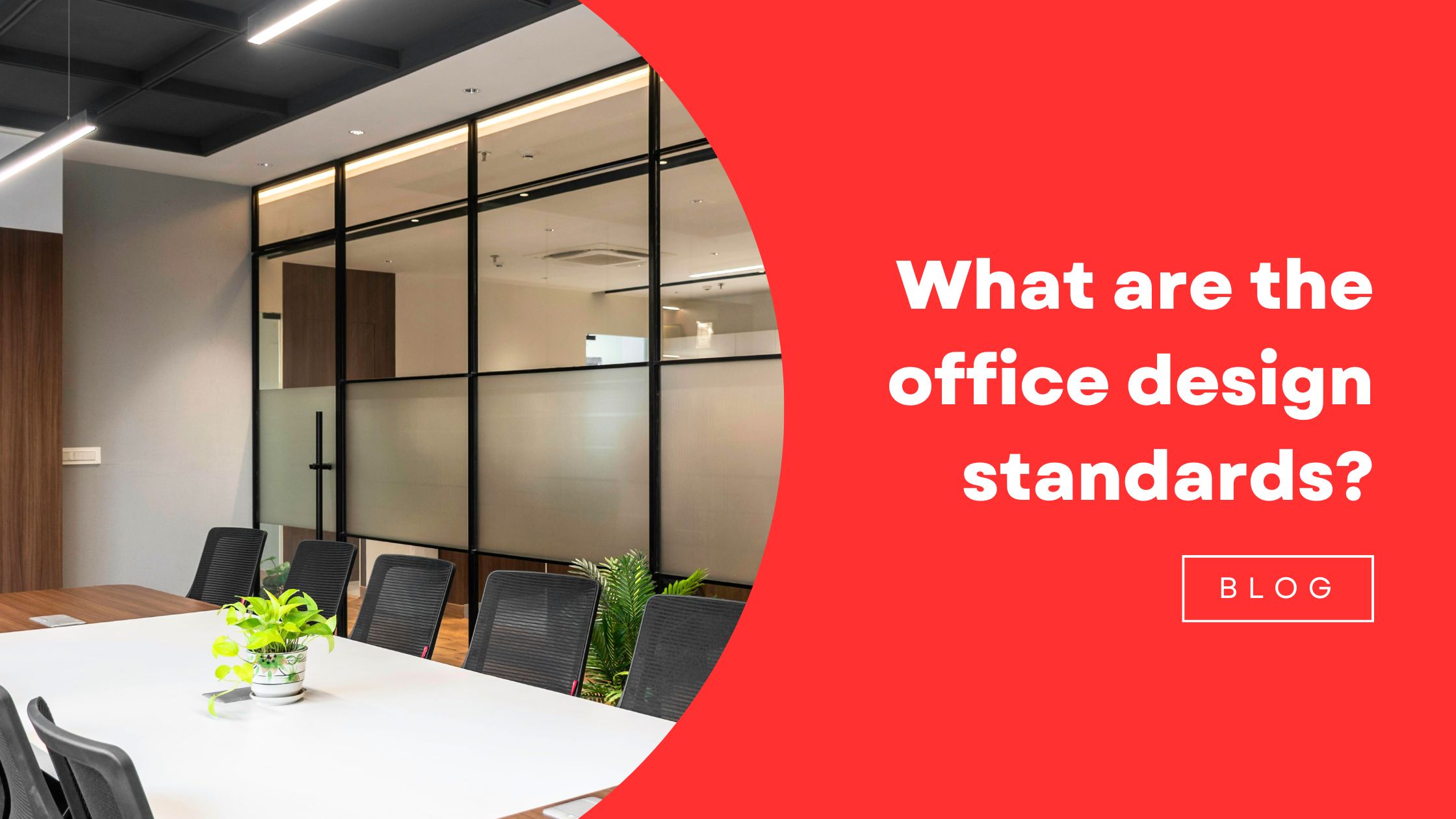
In the modern professional world, office interior design goes far beyond the idea of the “office” as just a room full of desks; it is a complex ecosystem designed to balance human health, environmental sustainability, and technological integration. Whether you are a business owner planning a renovation or an architect designing a new corporate hub, understanding office design standards is essential for creating a space that is both compliant and high-performing.
This guide breaks down the core standards of modern office design, from physical dimensions to the psychological impact of light and air.
1. Space Planning: The “Square Footage” Standard
The most fundamental design standard involves how much space each person needs to work effectively without feeling cramped.
- Average Density: Modern standards typically allocate 150–175 square feet per employee. This includes the individual workstation plus a share of common areas (hallways, breakrooms, and meeting rooms).
- The “Hybrid” Shift: With the rise of hybrid work, many companies are moving toward a 1:2 desk-to-employee ratio. Instead of permanent desks, the standard is shifting toward “hot-desking” or activity-based working zones.
- Clearance & Flow: For safety and accessibility (following ADA guidelines), main aisles should be at least 60 inches wide to allow two wheelchairs to pass or turn comfortably.
2. Ergonomics: The Human-Centric Standard
Ergonomics is the science of fitting the workplace to the user. Standards such as ANSI/HFES 100-2007 provide specific metrics to prevent musculoskeletal disorders.
The Modern Workstation Checklist:
- Desk Height: Standard fixed desks are usually 29–30 inches high. However, the current “gold standard” is the sit-stand desk, allowing for height adjustments between 22 and 48 inches.
- Monitor Placement: The top of the screen should be at or slightly below eye level, roughly 20–30 inches away from the face.
- Seating: An ergonomic chair must offer adjustable lumbar support, seat depth (to prevent pressure behind the knees), and a 5-point base for stability.
The 90-Degree Rule: Arms, hips, and knees should ideally maintain a 90-to-110-degree angle to minimize strain on the joints and spine.
3. Lighting and Environmental Quality
Standard office lighting is no longer just about “being bright enough.” It’s about visual comfort and circadian rhythm.
- Illuminance Levels: For general office work, the standard is typically 300–500 lux. Task lighting (desk lamps) should be available for detailed work.
- The 20-20-20 Rule: To prevent eye strain, design standards suggest workstations be placed to allow “long-distance” views. Every 20 minutes, employees should look 20 feet away for 20 seconds.
- Air Quality: Standards from ASHRAE dictate that offices should provide a minimum of 20 cubic feet per minute (cfm) of outdoor air per person to prevent “Sick Building Syndrome” and maintain high cognitive function.
4. Sustainability: LEED and BREEAM
If you want your office to be recognized for environmental excellence, you must design toward specific certification frameworks:
| Standard | Focus Area | Best For |
| LEED | Energy efficiency, water conservation, and material selection. | Globally recognized, very popular in North America. |
| BREEAM | Holistic sustainability, including management and land use. | Highly rigorous; the standard in the UK and Europe. |
| WELL Standard | Focuses exclusively on human health (air, water, nourishment, light). | Offices prioritizing employee wellness and mental health. |
5. Acoustic Standards: Managing the “Noise Floor”
The #1 complaint in open-office designs is noise. Standards like ISO 3382-3 measure how sound decays in an office environment.
- Sound Masking: Modern offices often use “white noise” systems to raise the background noise floor just enough to make distant conversations unintelligible.
- Zoning: A “Zoned Layout” is now the standard—separating high-energy “Collaboration Zones” (cafes, lounges) from “Deep Work Zones” (quiet libraries or phone booths).
6. Safety and Compliance (OSHA & ADA)
Regardless of aesthetics, your office must meet legal safety requirements.
- Fire Safety: Every point on an office floor should be within 200–250 feet of an exit. Fire extinguishers must be visible and placed every 75 feet.
- Universal Design: Under the Americans with Disabilities Act (ADA), all doors must be at least 32 inches wide, and countertops should be no higher than 34 inches to be accessible to everyone.
Designing for 2025 and Beyond
The “perfect” office is no longer a static grid of cubicles. Today’s standards emphasize flexibility through a Design and Build approach. A standard-compliant office today is one that can be reconfigured in a weekend, supports the physical health of its occupants, and uses smart technology to monitor occupancy and energy use.